

The physics of skimboardinggear
We strip away marketing hype to analyze carbon-wrap cores, high-density foam, and rail profiles. Choose your board based on fluid dynamics, not graphic designs.
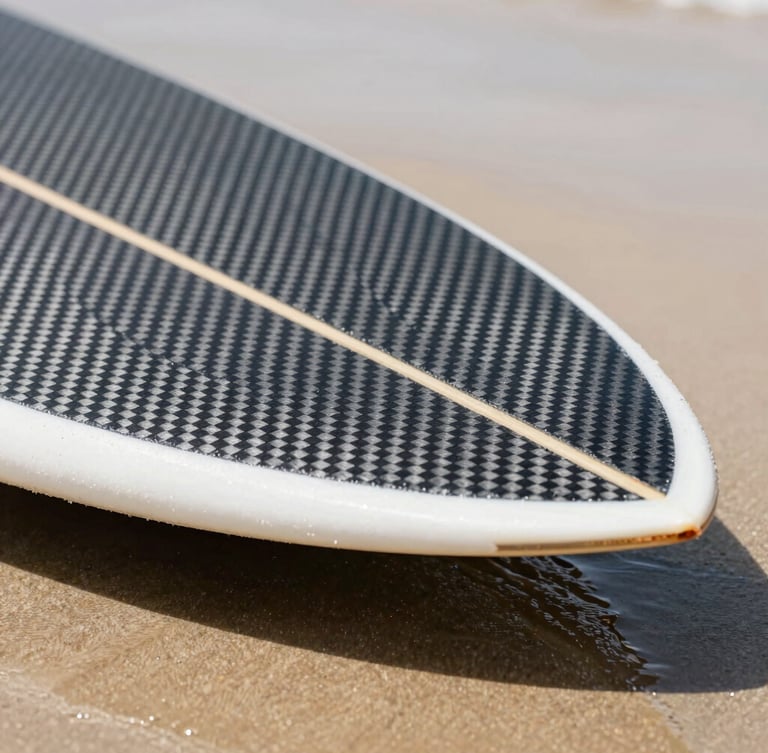
Carbon versus fiberglass
Carbon fiber delivers immediate energy transfer and minimal flex, keeping your speed high across the tide-line transition. Fiberglass offers a damp, forgiving ride that absorbs chop but sacrifices top-end velocity on long runs.
Match mass to wave
A board too small sinks before the transition; too large and you cannot force the turn. Calculate your template using three primary variables.
Weight & Displacement
Rocker Profile
Rail Thickness
Your physical mass determines the surface area required to maintain planing speed across wet sand and into deep water.
Steeper shorebreak requires a higher nose rocker to prevent pearling, while flatland skimming thrives on flat, fast templates.
Thinner rails cut sharply into the wave face for aggressive turns; thicker rails offer buoyancy and stability through soft water.
Tested under friction
We buy our own gear and test it in the shorebreak. From traction pad adhesion to cold-water wax durability, these are our honest findings.
Traction & Adhesion
Wax & Rail Protection
Evaluating pad density, kicktail height, and marine-grade adhesives under high wet-sand friction.
Testing temperature-specific wax formulas and rail guard tape against abrasive shorebreak sand.